

Motic Digital Pathology and Applied Spectral Imaging (ASI) Announce First Projects in Joint-Venture
Motic Digital Pathology and Applied Spectral Imaging (ASI) Announce First Projects in Joint-Venture to Create Integrated Digital Pathology Workflows for IHC and FISH Imaging through Validation with CorePath Laboratories.
Mutant p53 gains oncogenic functions through a chromosomal instability-induced cytosolic DNA response
Inactivating TP53 mutations leads to a loss of function of p53, but can also often result in oncogenic gain-of-function (GOF) of mutant p53 proteins which promotes tumor development and progression.
Hexavalent Chromium Targets Securin to Drive Numerical Chromosome Instability in Human Lung Cells
Hexavalent chromium is a known human lung carcinogen with widespread exposure in environmental and occupational settings.
Happy New Year 2024

Warm winter greetings & Best wishes for the coming year Wishing you Happiness and Success over this Joyful season.
Thank you for your support and goodwill throughout the year.
Best wishes for a Merry Christmas
and a fantastic New Year
ASI’s collaboration with the CytoCell® division of OGT
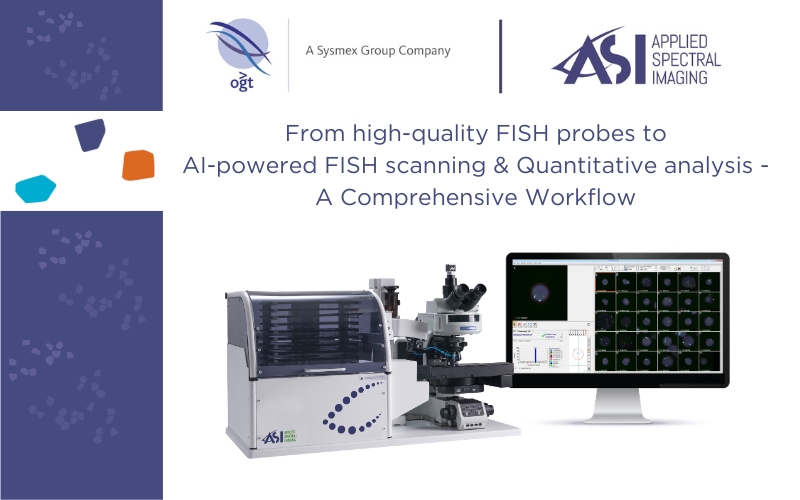
We are thrilled to announce our collaboration with the CytoCell® division of OGT, a Sysmex Group company and a global leader in diagnostic genomic solutions! This partnership expands our global reach and adds value to customers in Cytogenetics laboratories.
Harnessing Augmented Intelligence: The New Paradigm in Digital Pathology
In “Harnessing Augmented Intelligence: The New Paradigm in Digital Pathology,” we explore how Augmented Intelligence is reshaping the field of digital pathology.
Enhancing Efficiency: The Rise of Automation in Digital Pathology

In the ever-evolving healthcare sector, the integration of automation in digital pathology stands out as a beacon of progress. This transformation is leading to faster diagnoses, reduced human errors, and heightened efficiency, revolutionizing traditional pathology workflows.
The role of karyotyping in a modern clinical laboratory of medical Cytogenetics|Cytogenomics

RNDr. Jiří Horáček will present the Cytogenetic Laboratory, its background and the range of methods in use. He will explain the reasons which led to the introduction of automatic scanning and karyotyping as well as the procedure of this implementation.
Streamlined Processes: The Value of Integrated Workflows in Pathology
The medical diagnostics field is seeing tangible changes with the rise of digital pathology. This isn’t just about new tools or technologies—it’s about a fundamental shift in approach.
Computer-aided quantitative analysis as second opinion in the assessment of low HER2 IHC score in breast cancer – a pilot evaluation

Computer-aided quantitative analysis as second opinion in the assessment of low HER2 IHC score in breast cancer – a pilot evaluation.
The Digital Shift: Current Landscape of Digital Pathology
In an ever-evolving digital age, even traditionally conservative fields like medicine aren’t exempt from transformation. Our blog delves into the current landscape of digital pathology, charting its journey from the conventional microscopes and glass slides to an interconnected, global ecosystem.
Validation of Applied Spectral Imaging for Ki-67
The Ki-67 index is critical in many malignancies’ grading that correlates to prognoses and therapeutics. However, the assessment is not standardized.